






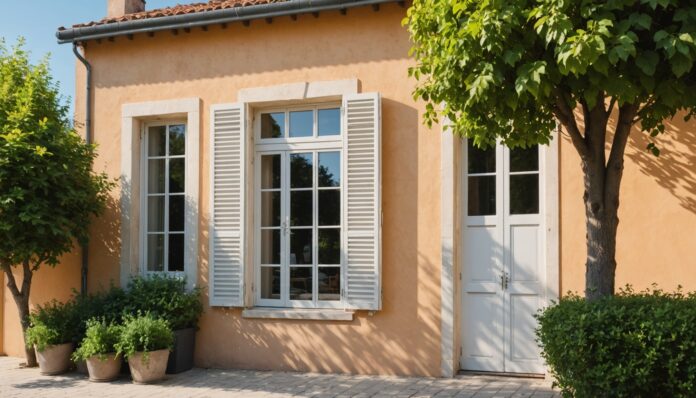

Three heat waves in a single summer: the recurrence of heat waves is no longer just changing daily habits—it is now changing the way French people search for housing. According to the study “Heat Wave & Real Estate 2026” conducted by leboncoin immo, 81% of French people say they experience discomfort related to extreme heat in their home, and more than a third now factor climate into their housing decisions. Summer comfort is gradually becoming a criterion in its own right, on par with price, square footage, or proximity to public transportation.
Summer comfort, a new stand-alone home-buying criterion
Long relegated to second place behind price per square meter or sun exposure, summer comfort is becoming a concrete selling point for real estate professionals. According to the leboncoin study, when imagining a more pleasant place to live in the face of the heat, 42% of French respondents choose the temperate coastline, 27% the mountains, and 18% northern France. A shift that could, over time, redistribute the appeal of certain regions.
Exposure, shutters, air conditioning: what's changing during home viewings
On the ground, real estate agents interviewed by AFP (Agence France-Presse) are noting a clear shift in buyer requests during home viewings. South-facing exposure, long favored, now appeals less to buyers, as the heat on the top floor of a Haussmannian building becomes nearly unbearable. Conversely, the presence of shutters, the ability to create cross-ventilation, a shaded outdoor space, a pool, or even the presence of trees in the neighborhood are now among the criteria discussed during viewings. Another sign of the times: air conditioning is no longer taboo. When already installed, it is even a major selling point for many buyers, whereas just a few years ago it could still be seen as an unnecessary feature.
The DPE (France's energy performance rating) doesn't tell the whole story about summer comfort
The Diagnostic de Performance Énergétique (DPE, France's energy performance diagnostic), now the benchmark for assessing a home's quality, remains built primarily around winter performance. Summer comfort appears there only as a qualitative indicator, with no bearing on the final energy rating: a home rated A can therefore turn out to be a real oven during a heat wave. In light of this, the Ministry of Housing has announced the creation of a “summer comfort DPE”, a dedicated rating that would inform tenants and buyers about how well a home holds up during extreme heat, in addition to the standard energy label. This would give future residents a clearer criterion to consider before committing to a purchase or rental project.
An impact already visible on prices and selling times
This shift in expectations is starting to show up concretely in the market. Homes considered uncomfortable in summer can now see their value discounted or stay on the market longer, while homes well-suited to the heat—good orientation, sun protection, cool outdoor spaces—are valued more highly. A paradigm shift that invites both owners and future buyers to rethink their priorities for their home, well beyond the single criterion of winter energy performance.
Frequently Asked Questions
Does summer comfort really affect a home's sale price?
Yes. Professionals are already seeing a price discount for homes poorly suited to heat and, conversely, better value for homes equipped with sun protection, shutters, or shaded outdoor spaces.
Does the current DPE take summer comfort into account?
Not really. The DPE remains focused on a home's winter performance. Summer comfort appears there only as a qualitative indicator, with no effect on the final energy rating, which explains why the Ministry of Housing has announced a future dedicated label.
What criteria are buyers now examining because of heat waves?
A home's exposure, the presence of shutters, the ability to create cross-ventilation, a shaded outdoor space, a pool, nearby trees, and increasingly, whether air conditioning is already installed.
Sources
MaPrimeRénov': Gas Now Excluded from Whole-House Renovations
As of September 1st, 2026, MaPrimeRénov' no longer funds keeping a gas boiler as part of a whole-house renovation for a single-family home in France. This shift, enacted by decree in late August, requires homeowners undertaking a major renovation to…
Older Homes: Why Apartments Are Holding Up Better Than Houses
The existing-home market is confirming its recovery in France, but this momentum masks an increasingly clear divide between two types of properties. On one side, apartments are holding steady, with prices even stabilizing in several major cities. On the other,…
Mortgage Rates: Why the Advertised Rate No Longer Tells the Whole Story
As fall 2026 begins, prospective buyers are watching their mortgage rate more closely than ever. Yet this figure, displayed prominently on online calculators, no longer tells the whole story. Between rising sovereign bond yields, banks' cautious stabilization, and the gradual…
Rental Lease: What the New Standard Contract Now Requires
Starting October 1, 2026, all residential leases signed or renewed in France will have to be based on a new standard rental contract. A decree published this summer reshuffles the mandatory clauses, with one concrete consequence for tenants and landlords…
This article was written with the help of artificial intelligence. Editorial policy
Table des Matières

