






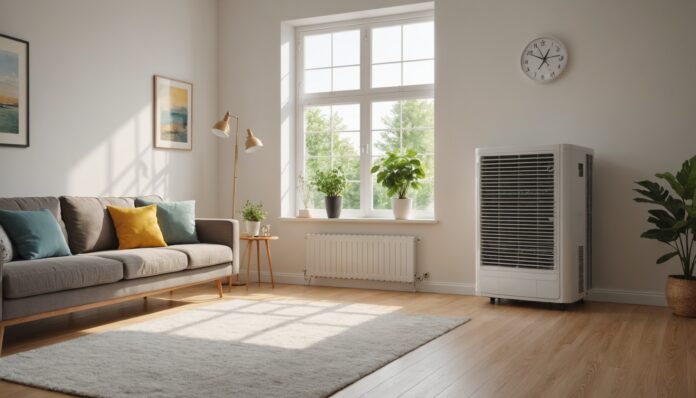

After an episode of exceptionally severe heat last June, air conditioning is becoming increasingly common in French households. But between thermal comfort and real health risks, what does science actually say? Here's what you need to know to protect yourself from the heat without putting your health at risk.
A Summer That Broke Emergency Room Attendance Records
According to bulletins from Santé publique France (the French public health agency), the June 2026 heat wave exceeded the intensity of the August 2003 heat wave. The peak was reached on June 25 and 26, with 698 SOS Médecins consultations for hyperthermia, heat stroke, or dehydration in a single day, and 2,089 emergency room visits the following day — levels never observed since health monitoring began in 2004. Older adults, young children, pregnant women, and workers exposed to heat remain the most vulnerable.
Air Conditioning: Real Health Benefits
When used properly, air conditioning concretely reduces the risk of dehydration and heat stroke, and limits symptoms linked to respiratory, cardiovascular, and allergic conditions. It also improves sleep quality, a factor that is often overlooked even though it plays a key role in physical recovery during periods of extreme heat.
But Two Clearly Identified Risks
- Legionellosis: this bacterial lung infection develops in stagnant water between 25°C and 45°C, particularly in poorly maintained systems. It can cause fever and respiratory failure, with an estimated mortality rate of around 10% of cases according to medical sources. Annual maintenance by a qualified professional is recommended to limit this risk.
- Thermal shock: too large a gap between indoor and outdoor temperatures irritates the respiratory mucous membranes. Health recommendations advise not exceeding a difference of 7°C during the day and 5°C at night — for example, if it's 35°C outside, the indoor temperature shouldn't drop below 28°C.
Smart Habits to Adopt
- Drink water regularly, without waiting until you feel thirsty.
- Avoid overly sharp temperature differences between indoors and outdoors.
- Have your air conditioning system serviced at least once a year.
- Limit physical activity during the hottest hours of the day.
- Call the toll-free “Canicule info service” hotline (0800 06 66 66, 9 a.m.-7 p.m.) if you're concerned about a vulnerable loved one.
Find more health news and our everyday practical tips, as well as our lifestyle ideas for making the most of summer.
Frequently Asked Questions
Is air conditioning dangerous for your health?
No, as long as it is properly maintained and used with a reasonable temperature gap relative to the outdoors. The identified risks (legionellosis, thermal shock) are linked to poor maintenance or overly aggressive settings, not to air conditioning itself.
What is the ideal temperature gap between indoors and outdoors?
Health recommendations advise not exceeding a 7°C gap during the day and 5°C at night compared to the outdoor temperature.
Who should you contact if you feel unwell because of the heat?
The national toll-free “Canicule info service” hotline (0800 06 66 66, available from 9 a.m. to 7 p.m.) provides advice, particularly for elderly or vulnerable people.
Sources
- Santé publique France – Heat Wave and Health Bulletin, July 3, 2026
- Pourquoi Docteur – Heat Waves and Air Conditioning, Legionellosis Risk
- Température Idéale – Health Risks of Air Conditioning
Exercise and the Brain: What the 2026 Study on New Neurons Reveals
Exercise doesn't just build muscle in your legs or strengthen your heart: it also acts directly on your brain. A study published in early 2026 by researchers at the University of Cincinnati sheds new light on a phenomenon long debated…
Septembre Bouge: France Relaunches Physical Activity for Back-to-School
From September 1 through September 30, France is holding its very first edition of Septembre Bouge (France's new “Move in September” campaign), the national month dedicated to physical activity and sports led by the Ministries of Sports and Health. This…
Sleep Loss and Weight Gain: The Real Culprit Isn't Hunger
Sleep loss has long been presented as a simple matter of fatigue. A recent American study, however, challenges a deeply rooted assumption: it's not hunger that drives weight gain when we sleep less, but rather the drop in energy that…
Kombucha and Kefir: What These Fermented Drinks Really Do for Your Health
On supermarket shelves in France, bottles of kombucha and kefir have taken up a spot nobody would have predicted three years ago. Driven by a generation looking for alternatives to soda, these fermented drinks are posting spectacular growth — but…
This article was written with the help of artificial intelligence. Editorial policy
Table des Matières

 of air conditioning, per health authorities.)