






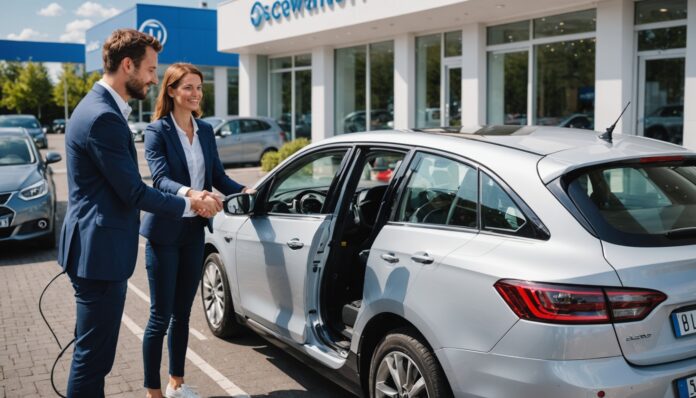

The used electric vehicle market in France is about to change shape. Starting September 1, 2026, a new incentive for buying or leasing a used electric car takes effect in France. Unlike the former ecological bonus, which was eliminated in 2024, this one is not funded by the government but by energy and fuel suppliers, through the energy savings certificate program (CEE, or “certificats d'économies d'énergie”).
How the new incentive works
The underlying principle is radically different from the old ecological bonus. The aid is now funded by private operators — energy suppliers, fuel suppliers, and their partners — as part of their CEE obligations. The base amount is estimated at around 337 euros, but it can climb as high as 2,360 euros for home care professionals who meet certain conditions. One important point to keep in mind: the exact amount varies significantly from one operator to another, which means it's worth comparing several offers before committing. The principle is similar to the one already used to help finance part of the cost of home energy renovation work.
Who is eligible?
- The vehicle must be 100% electric and have been first registered in France between January 1, 2017, and December 31, 2023
- The purchase or lease must be made through an authorized automotive professional
- The battery must retain a state of health of at least 80% of its original capacity
- The buyer or lessee must commit to keeping the vehicle for at least 36 months (whether purchased or leased)
- The CEE offer must be selected before signing the contract, or it will be rejected after the fact
The measure applies to transactions initiated before January 1, 2027, and finalized before July 1, 2027.
A signal for a still-fragile market
This new incentive arrives as the French auto market goes through a period of upheaval, caught between the rise of Chinese automakers and the decline of certain legacy brands. It comes on top of other regulatory changes weighing on households' car budgets, such as the ecological penalty and the weight tax on new vehicles. It's a sign that France is looking for ways to boost electric vehicle growth without straining public finances, unlike some neighboring countries exploring other approaches, such as the per-mile tax being tested across the English Channel. That said, how much the measure actually moves the used-car market will depend on how generous operators turn out to be in practice, since that varies widely from one provider to another.
For drivers still on the fence, this incentive adds to a landscape already shaped by strong momentum for electric vehicles in Europe, driven by gradually falling prices in the used car market and a growing range of eligible models.
Frequently Asked Questions
Is the incentive paid by the government?
No. Unlike the former ecological bonus, this aid is funded by energy and fuel suppliers through the energy savings certificate (CEE) program, not by the government budget.
What is the exact amount of the incentive?
There is no fixed regulatory amount: the base is estimated at around 337 euros, but each CEE operator sets its own scale, with amounts that can reach up to 2,360 euros for certain professionals who meet specific conditions.
Are all used electric cars eligible?
No. The vehicle must have been first registered in France between 2017 and 2023, come from an authorized professional, and have a battery retaining at least 80% of its original capacity.
Sources
Mortgage Loan Simulation: How to Get the Calculation Right
Before contacting a bank or a broker, more and more prospective homeowners are making an obligatory detour through a mortgage loan simulation. Done properly, this step avoids unpleasant surprises: within minutes, it reveals whether a project is financeable, under what…
Livret A: A Neobank Now Offers It to Savers
The Livret A is changing shape. Since August 20, 2026, a neobank has for the first time offered this regulated savings product to its French customers, a product until now distributed almost exclusively by traditional banking networks and online banks…
Bank Transfer Fraud: The Fightback Against an Explosion of Scams
Bank transfer fraud continues to rise in France and now affects hundreds of thousands of accounts every year. Faced with this wave of increasingly sophisticated scams, the Banque de France (the French central bank) has activated a new system capable…
Bank Fees: A Rise Confirmed by the Official Observatory
In France, bank fees continue to climb: according to the latest report from the Observatory of Banking Fees, backed by the Consultative Committee for the Financial Sector (CCSF) and published by the Banque de France, the rates charged by financial…
This article was written with the help of artificial intelligence. Editorial policy
Table des Matières

