






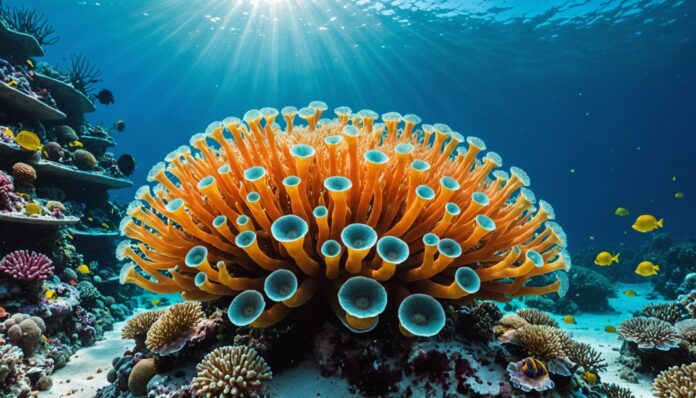

Beneath the multicolored brilliance of the Pacific's coral reefs lies a world invisible to the naked eye: hundreds of unknown coral bacteria have just been revealed by a team of international researchers. This discovery, stemming from the Tara Pacific scientific expedition, opens up an unexpected avenue for fighting antibiotic resistance, one of the great challenges facing modern medicine.
An Unprecedented Expedition Aboard the Schooner Tara
For several years, the schooner Tara, designed to withstand polar ice, sailed across the Pacific Ocean as part of the Tara Pacific program. On board, scientists from the Tara Ocean Foundation, the CNRS (France's National Center for Scientific Research), and the École normale supérieure (ENS-PSL) collected 820 samples from 99 coral reefs spread across 32 islands in the Pacific. The goal: to map the microbiome—the full set of micro-organisms—living in symbiosis with the corals.
The samples were then sequenced at Genoscope, France's national sequencing center, before being analyzed using the supercomputers at ETH Zurich. This computing power made it possible to reconstruct, from raw genetic data, the complete genomes of numerous microbial species never observed before.
645 Microbial Species, Over 99% of Them Unknown
The result exceeded researchers' expectations: 645 microbial species were identified from the samples, and more than 99% of them were completely unknown to science until now. A staggering figure that shows just how much coral reefs—though threatened by climate change—remain largely unexplored reservoirs of biodiversity.
These micro-organisms are not simple passengers: they live in close contact with the coral, sometimes protecting it against pathogens, sometimes competing with one another for space and resources. This constant competition has driven them, over the course of evolution, to develop a sophisticated chemical arsenal.
Toward New Antibiotics?
It is precisely this arsenal that interests the medical community. The reconstructed genomes reveal biosynthetic gene clusters—veritable blueprints for complex biochemical molecules: antibiotics, but also compounds with potential anticancer or anti-inflammatory properties. At a time when antibiotic resistance is advancing worldwide and when leads drawn from soil and terrestrial fungi are running dry, marine micro-organisms associated with corals are emerging as a still-untapped source of molecules.
The research, however, is only in its early stages: identifying a gene capable of synthesizing a promising molecule is just the first step before years of laboratory testing, followed by clinical trials, precede any potential drug coming to market.
A Biodiversity Still Largely Unexplored
Another lesson from this study: it covers only a tiny fraction of the world's coral diversity, even though more than 1,500 coral species have been identified around the planet. Each coral species appears to host its own microbial signature, shaped by millions of years of coevolution, suggesting considerable potential for discoveries in the years ahead.
- 820 samples collected from 99 coral reefs in the Pacific
- 645 microbial species identified, over 99% of them unknown
- Sequencing carried out by Genoscope, analysis via ETH Zurich's supercomputers
- New leads opened for antibiotics, anticancer agents, and anti-inflammatories
- Less than 1% of the 1,500 known coral species explored at this level of detail
This breakthrough also illustrates the close links between preserving marine ecosystems and advancing human health: protecting coral reefs, weakened by ocean warming, is not just about safeguarding a spectacular underwater landscape—it also means preserving a chemical library that remains largely undeciphered. An issue that connects with the major challenges covered in the pages devoted to the planet and, more broadly, to science on this site.
Frequently Asked Questions
What is the Tara Pacific expedition?
It is a scientific program carried out aboard the schooner Tara, which collected hundreds of samples from Pacific coral reefs in order to study their microbiome—that is, the micro-organisms living there in symbiosis.
Why are coral bacteria of interest to medicine?
These bacteria produce complex chemical molecules, some of which could serve as the basis for new antibiotics, at a time when resistance to existing treatments is worrying health authorities around the world.
Will these discoveries quickly lead to new medications?
No, this is only a preliminary step. Years of laboratory research, followed by clinical trials, will be needed before any molecule derived from these bacteria could become an available medication.
Sources
The Conversation — Futurity — UCSB Marine Science Institute
World's Oldest Amber: 385 Million Years That Rewrite Plant History
A piece of fossilized resin no bigger than a pinhead has just upended an entire chapter in the history of life on Earth. Paleontologists have announced the discovery of the world's oldest amber, roughly 385 million years old, unearthed from…
Unprecedented Underground Anomaly Detected Near the Pyramids of Giza
Beneath the plateau of the Pyramids of Giza, a geophysical survey has just revealed an unexpected underground anomaly, just a few hundred meters from the Great Pyramid. According to a study published in the scientific journal Archaeological Prospection, a team…
Nasa's Roman Space Telescope Launches to Unravel the Mysteries of Dark Matter
NASA's Roman Space Telescope left Earth on August 30, 2026, at 7:26 a.m. Eastern time, aboard a SpaceX Falcon Heavy rocket launched from the historic LC-39A pad at Kennedy Space Center in Florida. Thirty-one minutes and forty-one seconds after liftoff,…
An Exoplanet Uncovered in TESS's Archives Thanks to an Effect Predicted by Einstein
This is a major first for the American space telescope TESS. An exoplanet named Gaia23bra b has just been identified in its data thanks to gravitational microlensing, a phenomenon predicted by Albert Einstein more than a century ago. The study…
This article was written with the help of artificial intelligence. Editorial policy
Table des Matières

