






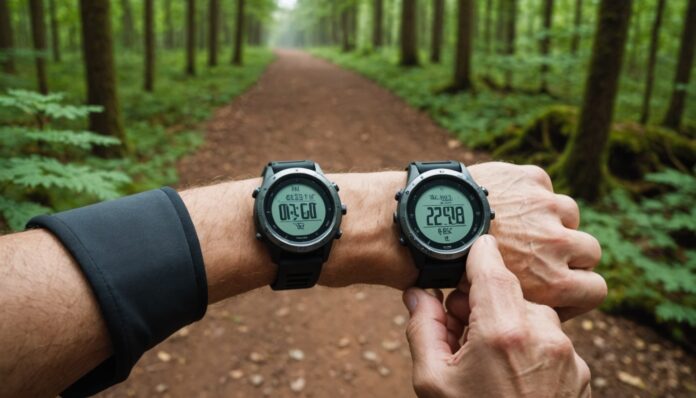

Running, trail running, hiking, or cycling: the GPS watch has become the go-to accessory in recent years for tracking your athletic performance. But with the growing number of models and features, choosing the right watch for your sport is far from obvious. Here are the criteria that really matter, and the most common mistakes to avoid before investing.
GPS Accuracy: The Number One Criterion
Not all models are equal here. Single-frequency GPS, long the standard, shows its limits in forests, dense cities, or mountains, where the satellite signal bounces off obstacles. Dual-frequency GPS (L1/L5) picks up two signals simultaneously and significantly reduces positioning errors in these challenging environments. To compare models before deciding, head to garmin.com, where the GPS watch lineup lets you line up several price ranges side by side.
Battery Life: Matching Your Choice to the Length of Your Outings
Battery life remains the deciding factor for anyone heading out for hours, far from any power outlet. A road runner generally gets by with around twenty hours of battery life in active GPS mode, while an ultra-trail runner will aim for at least 40 hours, or even more for the longest formats. High-end watches equipped with solar charging push this limit even further, at the cost of a higher budget.
Wrist Heart Rate: Reliability to Keep in Perspective
The optical sensor built into the strap is appealing for its simplicity, but its reliability remains lower than that of a chest strap: the measurement gap can exceed 10% in real-world conditions, especially during sudden changes of pace. Sensor placement, skin type, and ambient temperature all affect signal quality. This heart rate tracking is part of a broader picture of recovery, in which sport, sleep, and muscle recovery now form a well-documented trio. Poor sleep, moreover, can contribute to weight gain, an indicator that these watches actually help track more closely, night after night.
Mistakes to Avoid With Your GPS Watch
- Wearing the strap too loose, which throws off the optical heart rate sensor's readings.
- Neglecting updates and regular syncing with the app, which improve satellite accuracy over time.
- Choosing a model based on gimmicky features rather than real-world use: premium mapping is unnecessary for an urban runner, while too little battery life is a problem for a trail runner.
- Ignoring the stated water resistance rating, which is often insufficient for open-water swimming despite similar-sounding marketing claims.
Budget: How Much Should You Spend on a GPS Watch?
Expect to pay generally between €250 and €500 for a solid model for a regular runner, combining dual-frequency GPS, a decent heart rate sensor, and comfortable battery life. Beyond €700, the price difference mainly funds detailed mapping and materials, not necessarily more accuracy. This gradual move upmarket echoes what's been seen with the evolution of strength-training machines, where connectivity and data tracking have become selling points in their own right.
Frequently Asked Questions
Do you absolutely need a dual-frequency GPS watch?
It's only essential if you regularly run in forests, dense cities, or mountains, environments where single-frequency signals lose accuracy. For use on open roads, a simpler model is more than enough.
Is a wrist-based heart rate sensor enough for serious training?
It gives a good general trend, but a chest strap remains more reliable for threshold or interval training, where every beat counts.
What budget should you plan for a first purchase?
Between €250 and €500 is enough for a reliable, well-rounded watch suited to regular use, without piling on unnecessary features.
Sources
- Montre Cardio GPS – 2026 recommendations
- Running Addict – reliability of wrist-based heart rate monitors
- Sport Passion – common mistakes with your heart-rate GPS watch
This article was written with the help of artificial intelligence. Editorial policy
Table des Matières

