






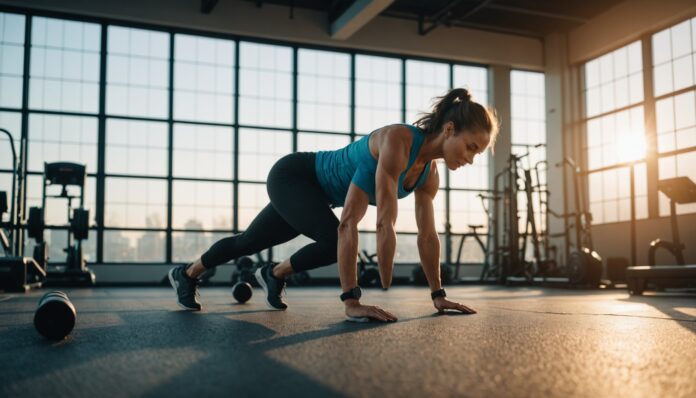

Running, walking, cardio session after cardio session: for a long time, physical fitness came down to exercise alone. Several surveys published in recent months in France paint a more complete picture, however, one in which sleep and strength training now carry as much weight as exercise itself in the equation of well-being.
The French Are Exercising More Than Before
According to the national survey of sports participation by the National Institute for Youth and Popular Education (Institut national de la jeunesse et de l'éducation populaire, Injep), 61% of French people ages 15 and older report regular sports participation, an increase of 7 points since 2018. Walking and running remain the most widespread category of activity, with 32% practicing weekly. Notably, the gap between men and women has narrowed to just 1 point, compared with 6 points in 2018, and health and well-being are by far the top motivations, well ahead of competition.
Sleep, Fitness's Blind Spot
But this surge in sports participation runs up against a weak point: sleep. According to a survey by the National Institute of Sleep and Vigilance (Institut national du sommeil et de la vigilance, INSV) published in March 2026, the French sleep an average of 6 hours and 50 minutes on weeknights, a figure down from the previous year and well below the 7.5 hours recommended by specialists. About a quarter of respondents sleep less than 6 hours a night during the week, and nearly a third report suffering from at least one sleep disorder. Asked about their health priorities, the French actually rank “sleeping well” (42%) ahead of “eating well” (38%) and “exercising” (20%).
Strength Training Makes a Comeback
The third pillar on the rise is strength training. According to fitness industry data, the share of people taking group strength-training classes rose from 30% in 2018 to 36% in 2026, driven by a quest for functional strength rather than aesthetics alone. Obstacles remain, however: more than one in two participants doesn't know where to start, and one in two feels uncomfortable in spaces dedicated to strength training.
- Cardio: walking, running, cycling — the historic foundation, still the most widely practiced.
- Strength training: increasingly incorporated, but still poorly mastered by many participants.
- Sleep: long neglected, it is once again becoming a health criterion in its own right in the eyes of the French.
What This Means for Anyone Who Really Wants to Improve
Experts agree on one message: relying on a single pillar is no longer enough. Regular cardio activity without strength training or quality sleep limits the expected benefits, whether for weight loss, daily energy, or injury prevention. To make progress, it's better to pair two short strength-training sessions a week with an existing cardio routine, and to treat nights of sleep as a workout in their own right rather than an afterthought. Find more practical tips in our Sports and Health sections, as well as all our dedicated articles in Health & Fitness.
Frequently Asked Questions
How many hours of sleep are needed to properly recover from exercise?
Specialists recommend about 7.5 hours of sleep per night for an adult, a threshold the French do not reach on average on weeknights, according to the 2026 INSV survey.
Should you prioritize cardio or strength training to stay fit?
The two are complementary: cardio maintains cardiovascular capacity, while strength training preserves muscle mass and functional strength, especially from your forties onward.
Why is sleep considered a pillar of physical fitness?
Insufficient sleep hampers muscle recovery, appetite regulation, and concentration, which limits the benefits of exercise even when practiced regularly.
Sources
- Injep — National survey of sports participation
- INSV — Survey on sleep, rhythms, and environments 2026
- Les Mills — Fitness, sport, and shape in 2026
Remote Work and Health: What Recent Studies Show
In France, remote work has become a lasting part of working habits, but its effects on employees' health continue to raise questions among researchers and institutions. Between well-documented physical risks, psychological isolation, and real benefits for certain profiles, the studies…
Sleep Loss and Weight Gain: The Real Culprit Isn't Hunger
Sleep loss has long been presented as a simple matter of fatigue. A recent American study, however, challenges a deeply rooted assumption: it's not hunger that drives weight gain when we sleep less, but rather the drop in energy that…
Mental Health at Work: Employee Well-Being Improves, But Stigma Persists
The French government has confirmed the extension into 2026 of the National Priority Cause (an annual awareness campaign designated by the French government) devoted to mental health, under the title “Let's Talk About Mental Health!” The decision coincides with the…
Kombucha and Kefir: What These Fermented Drinks Really Do for Your Health
On supermarket shelves in France, bottles of kombucha and kefir have taken up a spot nobody would have predicted three years ago. Driven by a generation looking for alternatives to soda, these fermented drinks are posting spectacular growth — but…
This article was written with the help of artificial intelligence. Editorial policy
Table des Matières

