






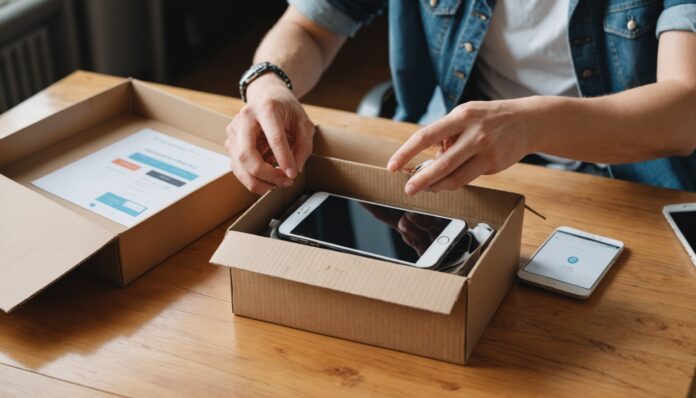

Clearing out a closet on Vinted, offloading equipment that's no longer needed on Leboncoin, padding out the monthly budget with a few regular sales: this activity, long low-key, is now visible to the tax authorities. Since the European DAC7 standard took effect, peer-to-peer selling platforms are required to pass certain user data on to the French tax administration. A good reminder of a simple but often misunderstood rule: being reported doesn't mean being taxed, as long as you know where the line is drawn.
What DAC7 actually reports to the tax authorities
In practice, a platform like Vinted, Leboncoin, eBay, Airbnb, or BlaBlaCar must report to the DGFiP (the French tax administration) the data of sellers who cross one of two thresholds within a calendar year: 30 transactions or 2,000 euros in revenue. Just one of the two criteria is enough to trigger the reporting. This mechanism doesn't create a new tax: it simply gives the administration a snapshot of online selling activity, which it can cross-check against tax returns if needed.
Clearing out your closet remains, in the vast majority of cases, tax-exempt
The key distinction to remember comes down to the nature of the activity. Under French tax law (the Code général des impôts), reselling a used personal item is treated as simply disposing of a piece of private property: since the resale price is almost always lower than the original purchase price, there's no taxable capital gain. In practice:
- Selling your own used clothes, furniture, or electronics remains tax-exempt, even if the DAC7 thresholds are exceeded and the platform reports the data.
- An exception exists for valuable items — jewelry, artwork, precious metals, antiques — once the sale price exceeds 5,000 euros: a specific flat-rate tax can then apply.
- The tax calendar remains unchanged: income earned in a given year is declared the following spring on impots.gouv.fr, with a tax notice arriving in the fall.
When occasional selling becomes a commercial activity
The line not to cross unknowingly is the one separating personal destocking from a genuine buy-to-resell business. Regularly buying items with the intent to resell them at a markup, or offering paid services online, changes the classification of the activity: it becomes commercial, or is treated as industrial and commercial profits (BIC). In that case, registering as a micro-entrepreneur (France's simplified self-employed status) becomes necessary, with gross revenue to be declared. Good news for anyone starting out: the micro-BIC regime applicable to the sale of goods includes a flat 71% deduction meant to represent expenses, so only 29% of revenue actually received is added to other taxable income.
The right approach before getting started
For anyone looking for supplemental income through online resale, it's better to plan ahead than to discover the rule after the fact: keep a record of the original purchase price of items resold, clearly distinguish one-off sales from a personal closet from a repeated activity aimed at making a profit, and look into micro-entrepreneur status as soon as the activity becomes regular. These habits, useful for any small side activity, help avoid unpleasant surprises while still comfortably enjoying good deals from shopping and peer-to-peer resale, without worrying about every update to applicable tax guidance.
Frequently Asked Questions
If Vinted or Leboncoin reports my sales to the tax authorities, do I have to pay taxes?
Not automatically. DAC7 reporting informs the administration, but selling used personal items generally remains tax-exempt, since it doesn't generate a taxable capital gain.
At what amount are my online sales reported to the tax authorities?
As soon as 30 transactions or 2,000 euros in revenue are reached within a calendar year for the same seller on the same platform, with just one of these two thresholds being enough to trigger the data transmission.
When must online resale be declared as a commercial activity?
When it becomes regular and organized with a profit-making purpose, for example buying products to resell them at a markup: you then need to register as a micro-entrepreneur and declare your revenue, with a flat 71% deduction under the micro-BIC regime for the sale of goods.
Sources
- Socic — Vinted, Leboncoin, Airbnb: what to declare to the tax authorities
- Economie.gouv.fr — Selling personal belongings: should this income be declared?
- Tout Sur Mes Finances — Tax declaration for internet sales
Micro-Entreprise: Toward a Three-Year Limit for Primary Activity?
A joint report from the Inspection générale des finances (IGF) and the Inspection générale des affaires sociales (IGAS), the French government's finance and social affairs audit bodies, dated March 2026 and made public on October 9, proposes a significant change…
Micro-Business Boom: Why More French People Are Going Freelance
In 2025, France registered 758,600 new micro-businesses, an all-time record since the regime was created in 2009, according to the latest figures published by Insee (France's national statistics agency). As of the end of June 2025, the country had 3.186…
Micro-Entrepreneurs: What Online Side Income Really Pays
The fantasy of an easy-to-generate supplemental income online remains persistent, but the latest official figures from INSEE (the French national statistics institute) set the record straight. Between the real boom in micro-business creations and the modesty of the earnings actually…
Digital Platform Workers: Toward a Status Change for Delivery Riders and Freelancers
Bicycle delivery riders, ride-hailing (VTC) drivers, freelancers registered on digital platforms: their status could soon change dramatically. France must transpose, before the end of 2026, a European Union directive on platform workers, with a presumption of employee status on the…
This article was written with the help of artificial intelligence. Editorial policy
Table des Matières

